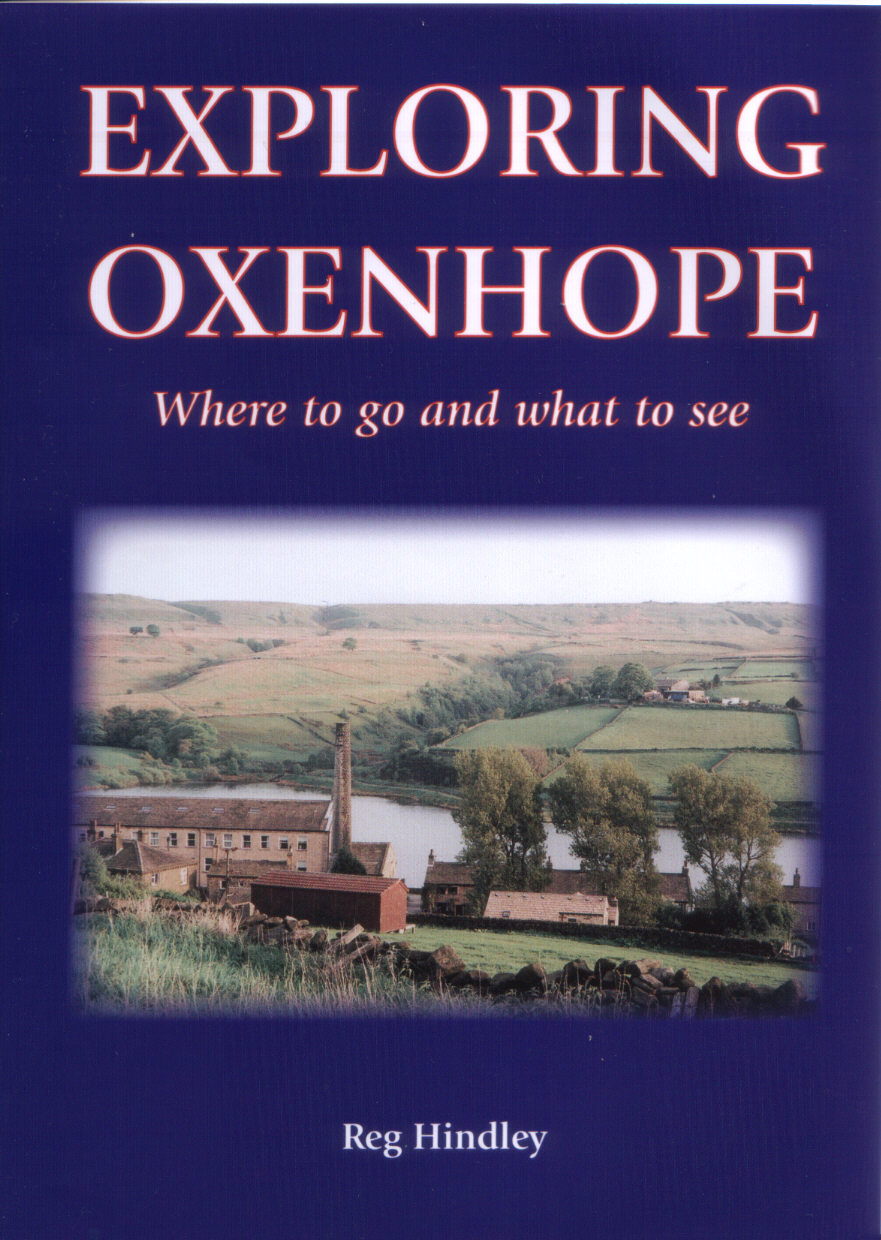
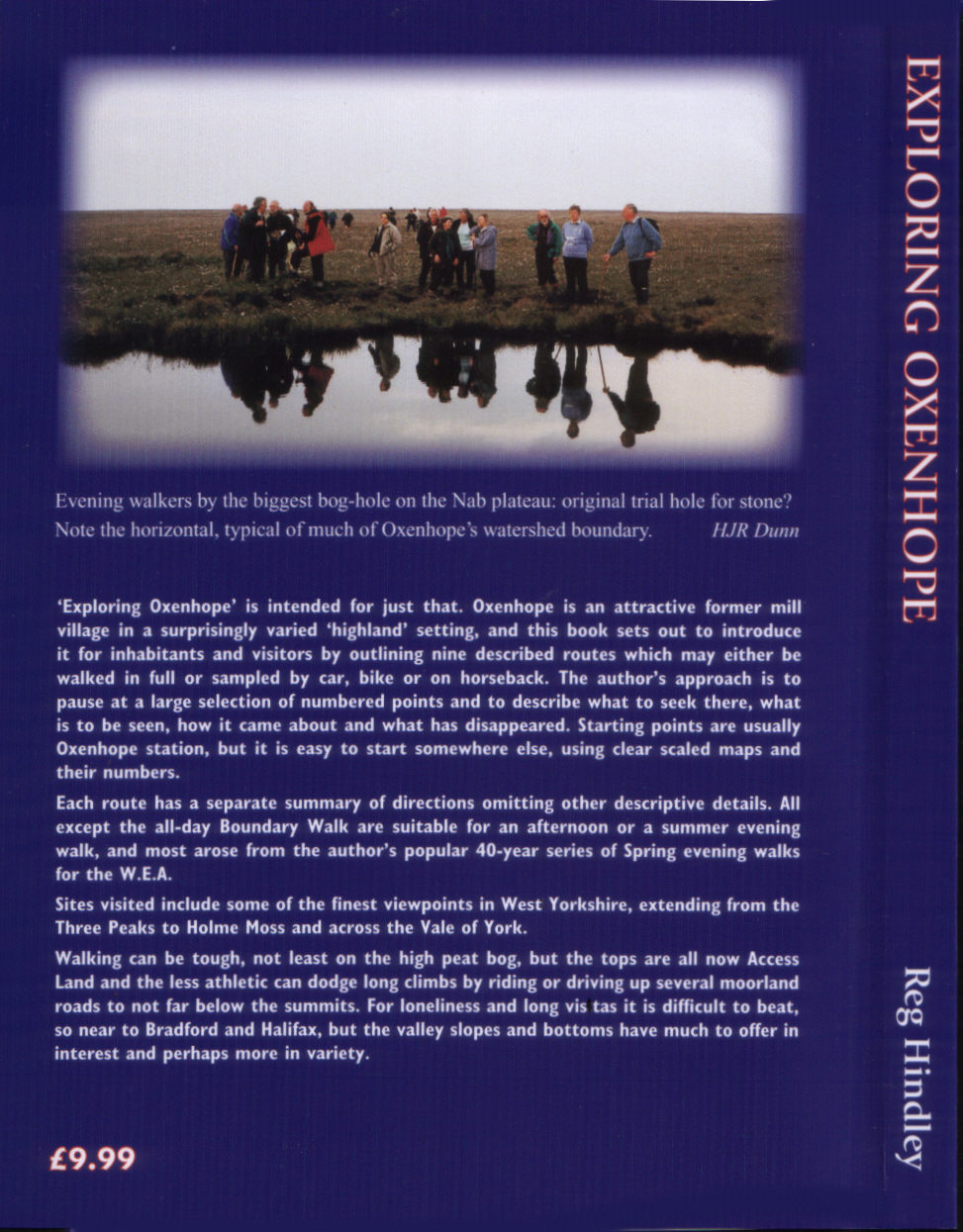
Reg
Hindley: 'Exploring Oxenhope: where to go and what to see.' Oxenhope
2006. 220 printed pages including 14 maps and 21 photo illustrations
including 2 in colour. Paperback, £9.99, (large) pocket size.
On sale at Reids'
Bookshop, Haworth Tourist Info. Centre, Oxenhope post office,
fisheries and newsagent, and from the author at Thorn Villa (tel
643087).
This book is the author's
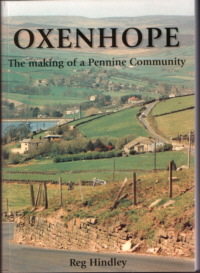
second on Oxenhope, his 'Oxenhope, the making of a Pennine
community' having now sold out. The new print-run is
similar, just above 600. If the first book was essentially
historical in its approach, the new one guides us round the village,
its upper valley and moors along nine selected routes which cover
almost everywhere if approached on foot but can be sampled readily by
bike, on horseback or even by car, using any of the roads which cross
the high moorland boundary and are more plentiful on the lowlands. Most
of the routes start at the station as a convenient centre, but it is
easy to start somewhere else, using the clear maps. All but the
boundary walk (11 or more miles) demand no more than half a day or
a summer evening, and suitable detours are suggested to shorten routes
- or to extend them for enthusiasts. Strong footwear and
waterproof clothing are usually essential for Oxenhope conditions: or a
firm decision to stay home if the outlook is nasty!
Emphasis is on what there
is to see at as many as 170 stopping or turning points. 25 pages of
Preface and Introduction set the general scene, including the basic
underlying geology and glaciation which determine much of the landscape
and most of the building stone. Reg also stresses the things which have
disappeared but leave traces to search for: such as 'lost'
farms, mills, chapels and schools, as well as the ice sheet which
melted with the last great 'global warming'. Place names also
receive attention, as they give character to the district -
especially those which baffled or shocked the Ordnance Survey
map-makers.
Each walk has its own
map, which serves as an index by numbering every stopping place, which
is then printed in bold in the text to aid locating it. A description
is given for most stops and often a more general 'district' description
of what to look for round a series of stops - as on the Black Moor,
round Sawood, at Lowertown, round Dike Nook, on Marsh, or up
Stairs. Stops include prominent viewpoints, and it is not often
realised that vistas on Oxenhope Moor extend to the Three Peaks, Holme
Moss, well up Wharfedale, and across the Vale of York: if you pick your
weather! Reg argues that for loneliness and long views it is difficult
to beat so near to Bradford and Halifax, but the valley slopes and
bottoms have more variety if the interest is traditional Pennine
architecture or industrial archaeology.
Given proximity to
Haworth and the worldwide interest in the Bronte family, Oxenhope has
been very scantily 'written up'. Reg has long been working to remedy
this. His new book attempts to distil forty years of leading
his 'Worth Valley Walks' for Keighley W.E.A., to reflect
the pleasure he has derived from walking Oxenhope's streets, fields and
moors, and to convey it to his readers.
 Oxenhope Online

 Price £9.99 + P&P
  SOLD
OUT
SOLD
OUT